First results after 1 month release
Contracts rejection down
26%
From 21.36% to 15.82%
Tiered carrier retention up to
76%
Compared to 64% MoM
Acceptance button up to
500
weekly events
Problem
Following all the research and discovery, we constructed an opportunity tree to gain a clearer understanding of our priorities. This involved considering design and engineering efforts alongside the potential business impact to determine our initial focus areas.
Due to time constraints and the existence of a well-established Design system, we've adopted an efficient approach by concentrating on user flows and bypassing wireframing. Our decision was to directly advance to creating a high-fidelity mockup for user testing.
Carrier Management
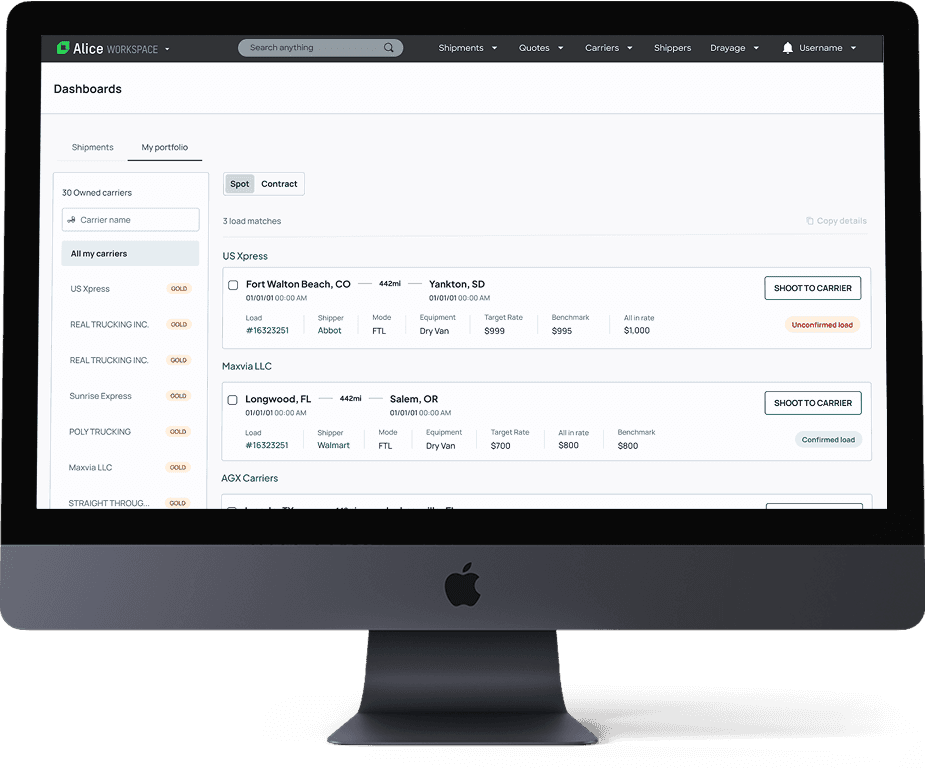
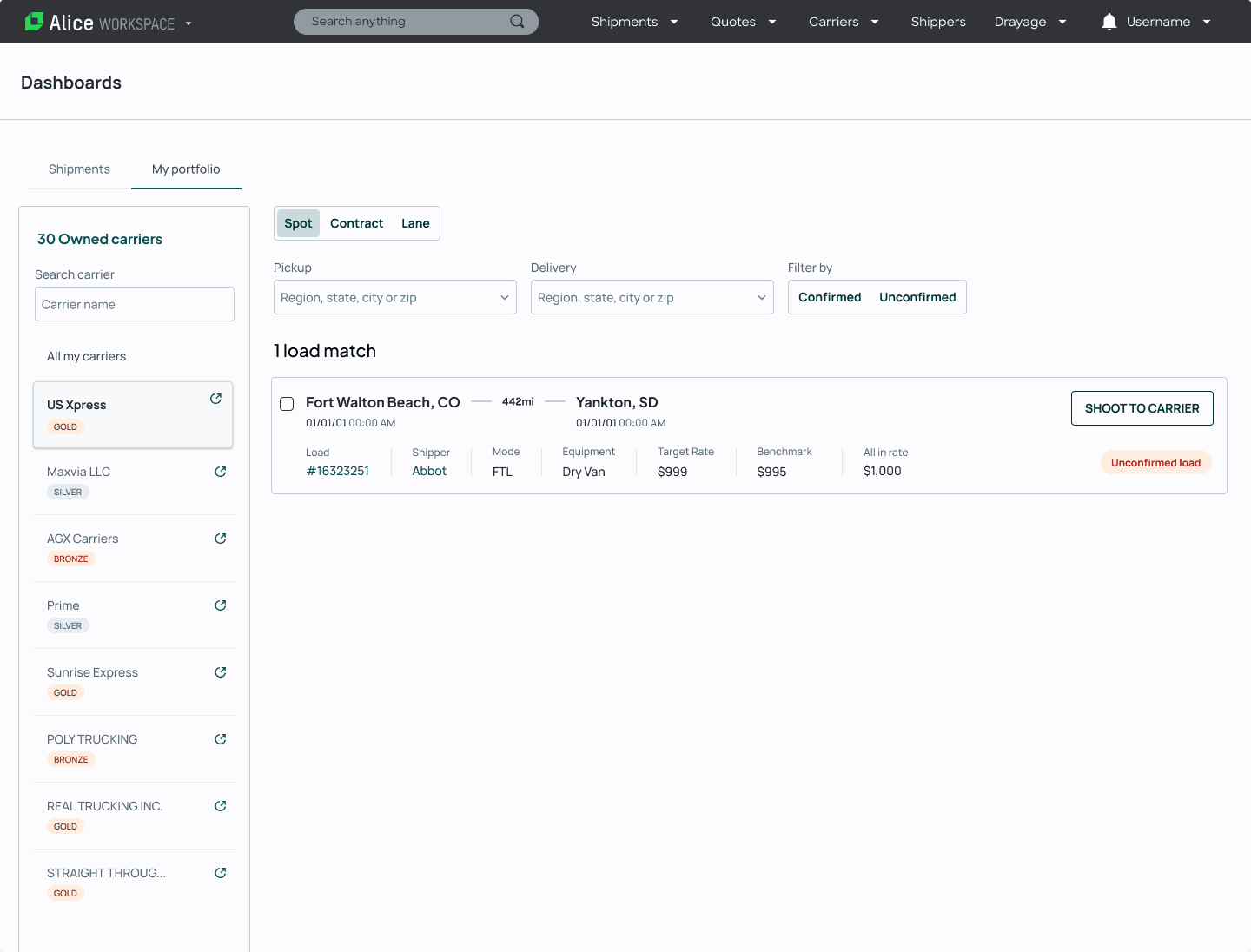
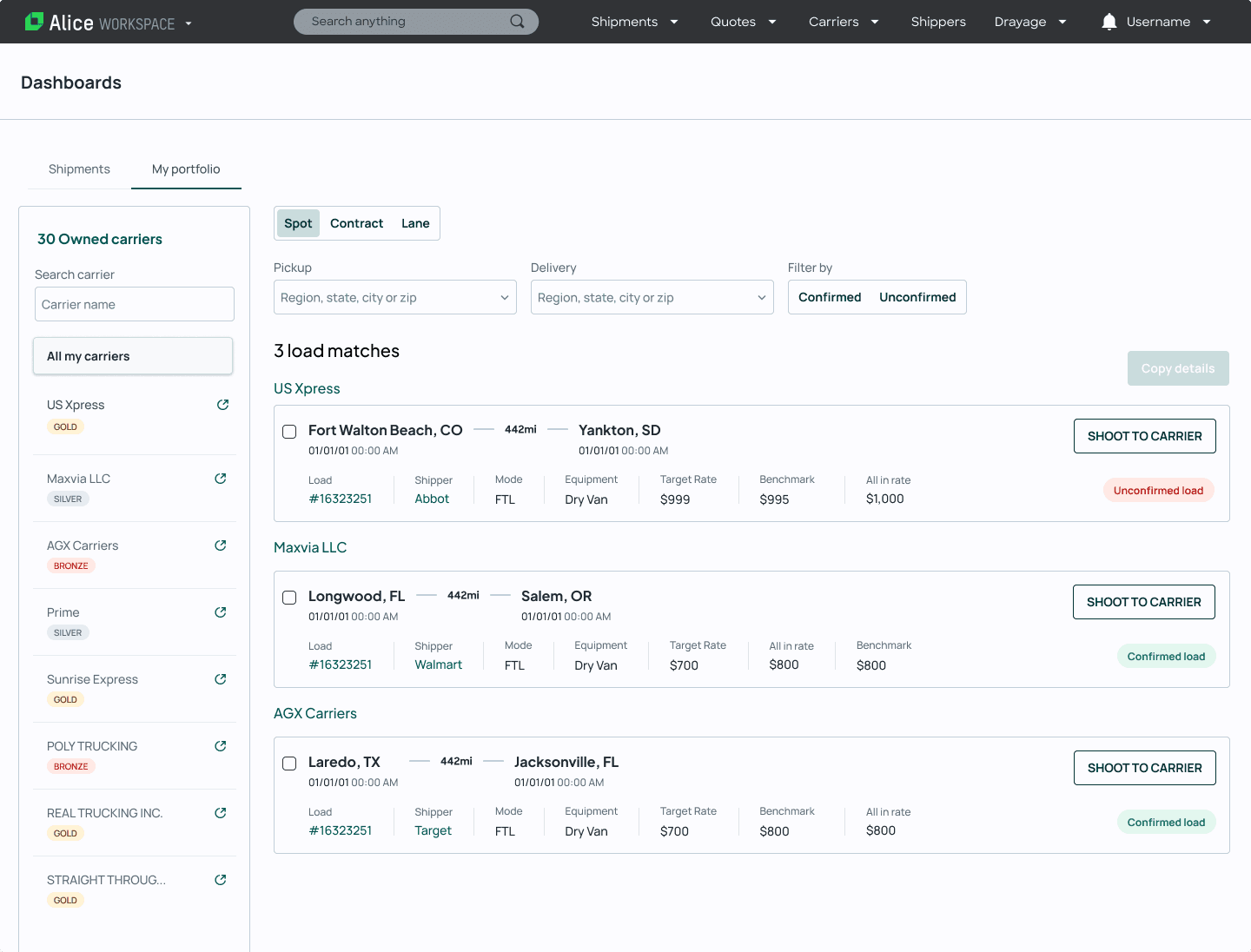
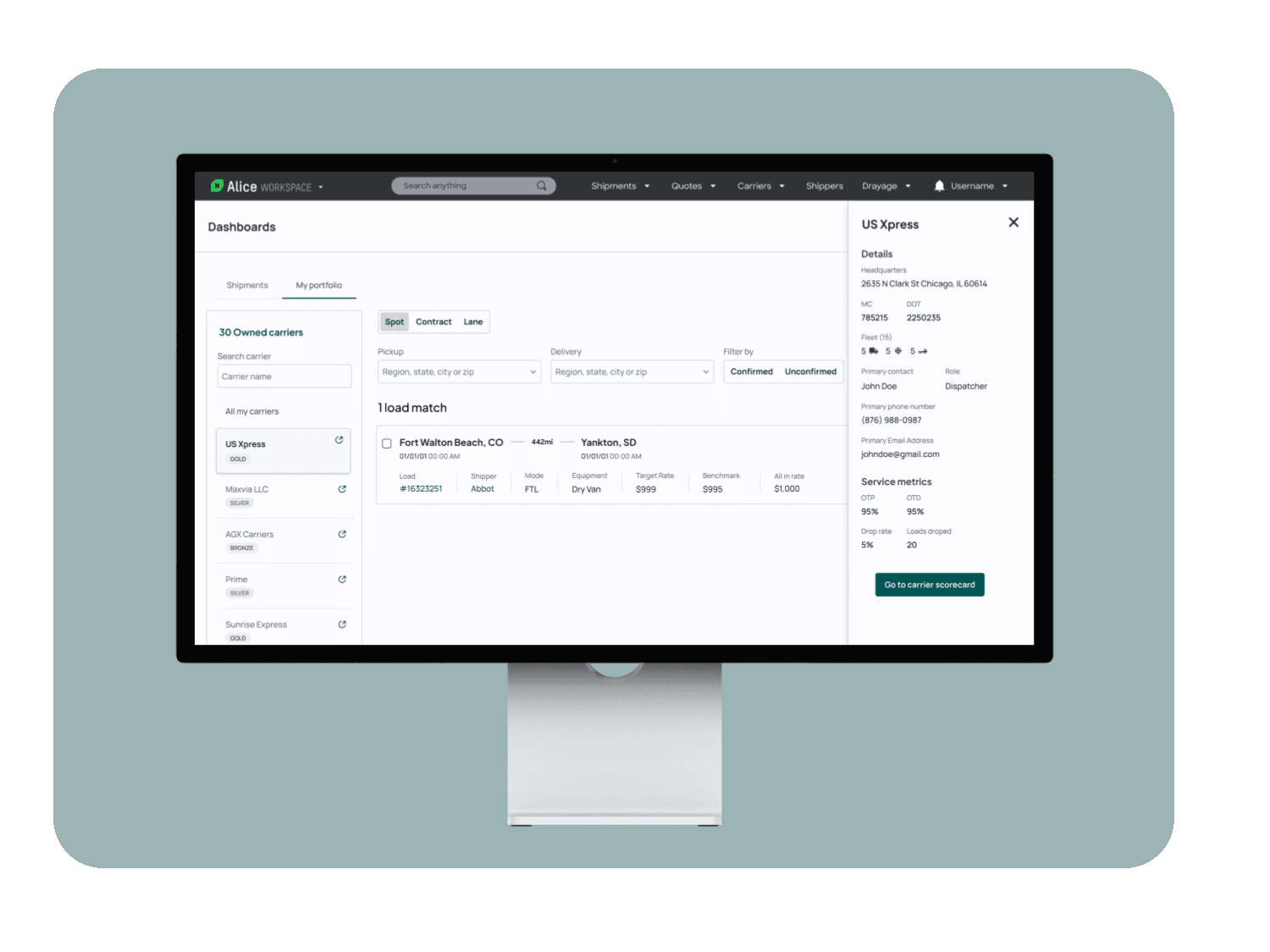
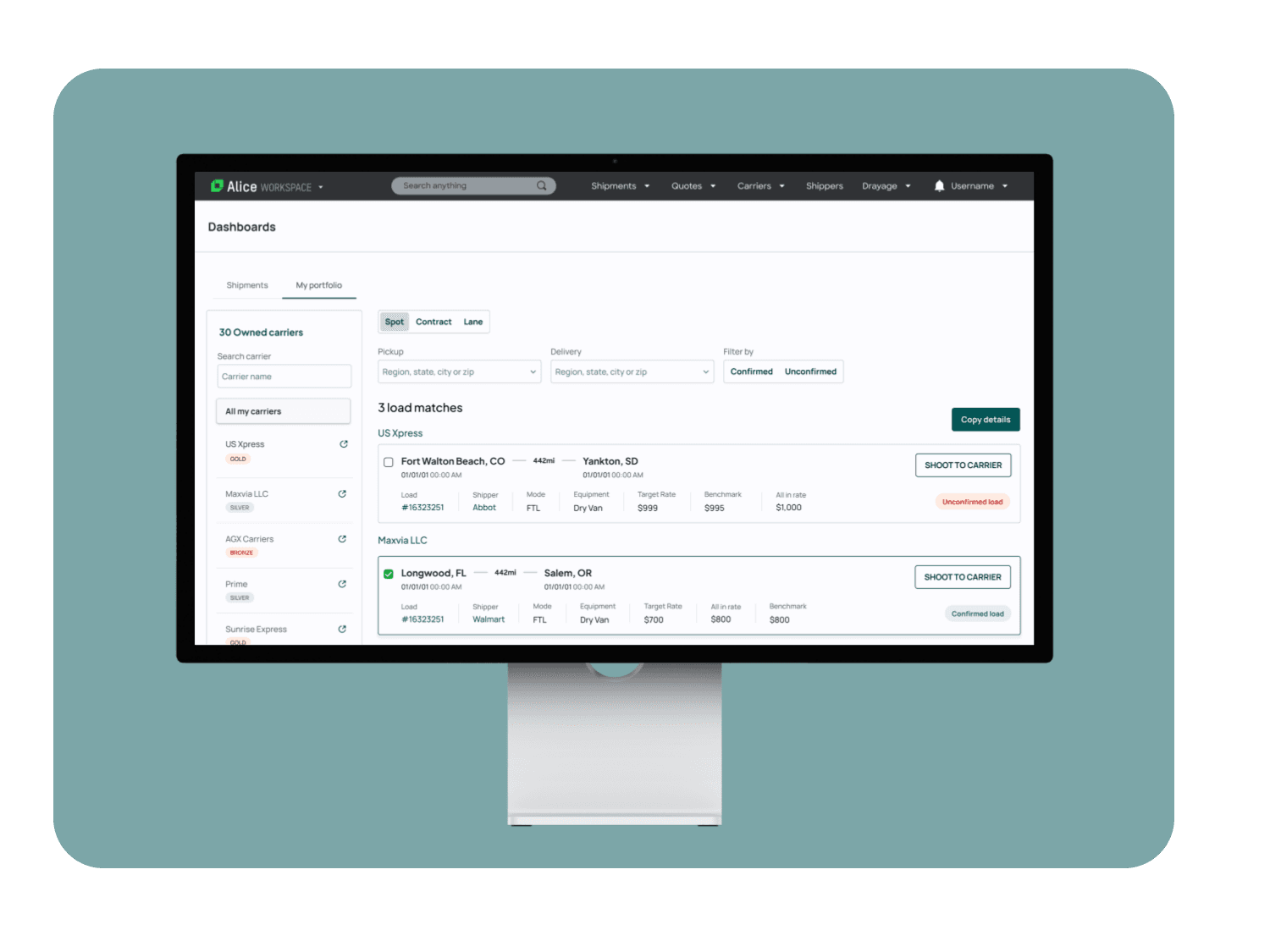
Comprehensive visibility into their carrier portfolio, including active contracts and carrier-specific preferences.
Enhanced load-to-carrier matching, enabling faster and smarter sourcing decisions based on the best fit for each load.
Leveraging an existing design system, high-fidelity prototypes were created and tested early, enabling a rapid path from research to implementation.
What is Loadsmart?
Loadsmart is an American company that creates technology solutions for the logistics industry, serving carriers, shippers, and facilities. They operate an internal brokerage enabled by digital tools, and they also develop tech tools to enhance other companies' operations.
I worked as a product designer for two related teams that the main goal was to improve the sourcing process for Carrier Sales Representatives.
The Carrier Management tool was invisioned to help Carrier Sales Representatives see all their current carrier portfolio and active contracts, enabling them to make better and smarter decisions
Background
Loadsmart used DAT to help Carrier Sales Reps quickly source loads, especially for same-day needs. Discontinuing DAT has created challenges, particularly in maintaining margins and service levels. With a freight market rebound expected, we were concerned about the strain on carrier sales operations. To address this, we're actively seeking new solutions to optimize sourcing and enhance operational efficiency, ensuring we're prepared for the anticipated surge in volume.
Timeline
From initial explorations to final designs in just 4 weeks, including one week of field research with users in Chicago.
In office research
Goals
Identify the specific challenges and pain points experienced by CS Reps in their day-to-day activities, with the aim of developing or enhancing products to address these issues.
Explore the software and tools utilized by CS Reps in their routine tasks to identify potential integration or improvement opportunities.
Examine the impact of the removal of DAT on the routine of CS Reps and understand how their work processes have been affected as a result.
Interview topics
Carrier service
Pain Points
Finding new carriers
Contracts
Compliance
After sourcing
Process
Throughout the week in Chicago, we engaged in shadowing and conducted interviews with the team to gain deeper insights into the challenges we were encountering. Over this period, we had discussions with 12 individuals and conducted two workshops. This collaborative effort involved working closely with two product managers.
Outcomes
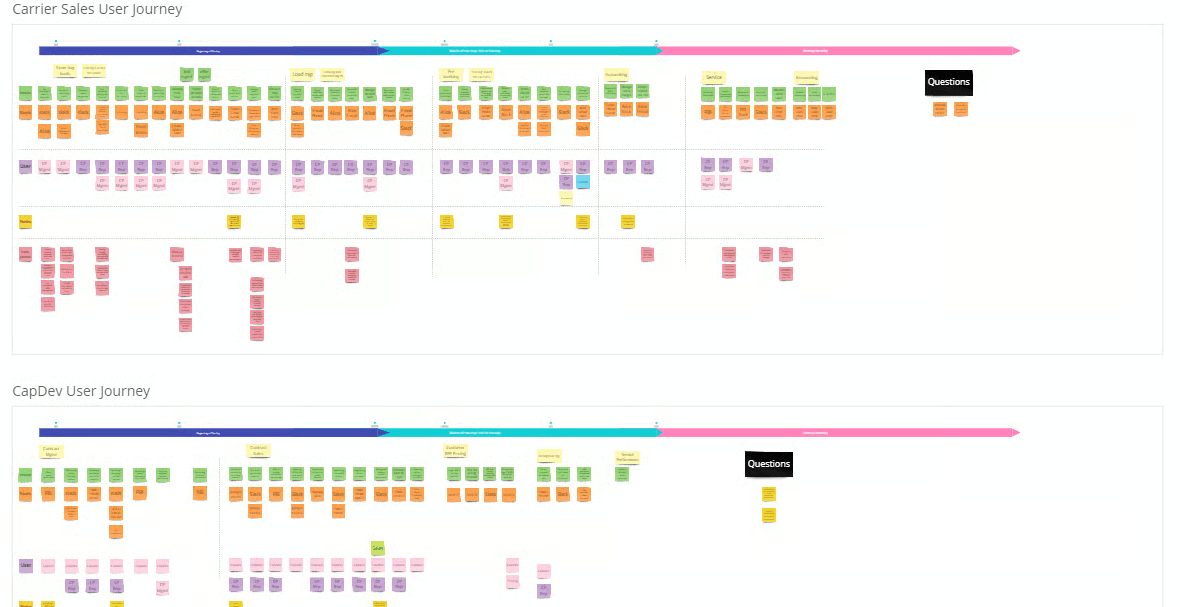
We successfully gathered enough information to construct the journey for two distinct profiles:
Capacity delevopment (users who managed contracts)
Carrier Sales Representatives
User Journey
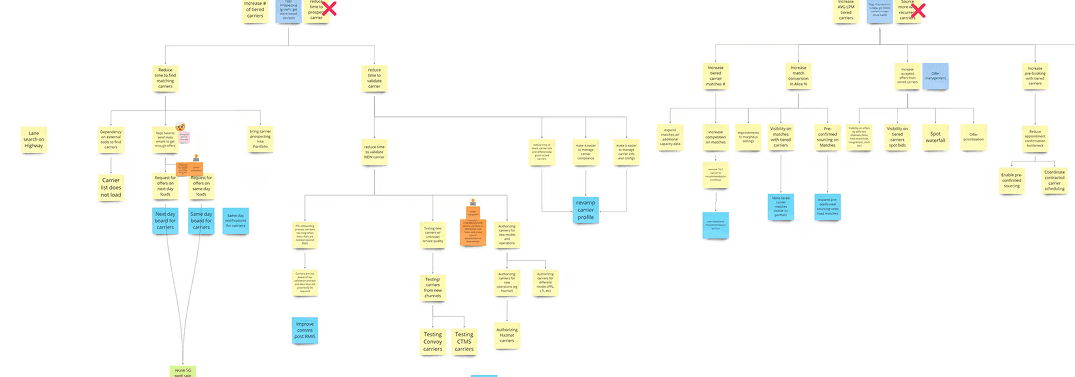
Opportunity tree
User flow
Following all the research and discovery, we constructed an opportunity tree to gain a clearer understanding of our priorities. This involved considering design and engineering efforts alongside the potential business impact to determine our initial focus areas.
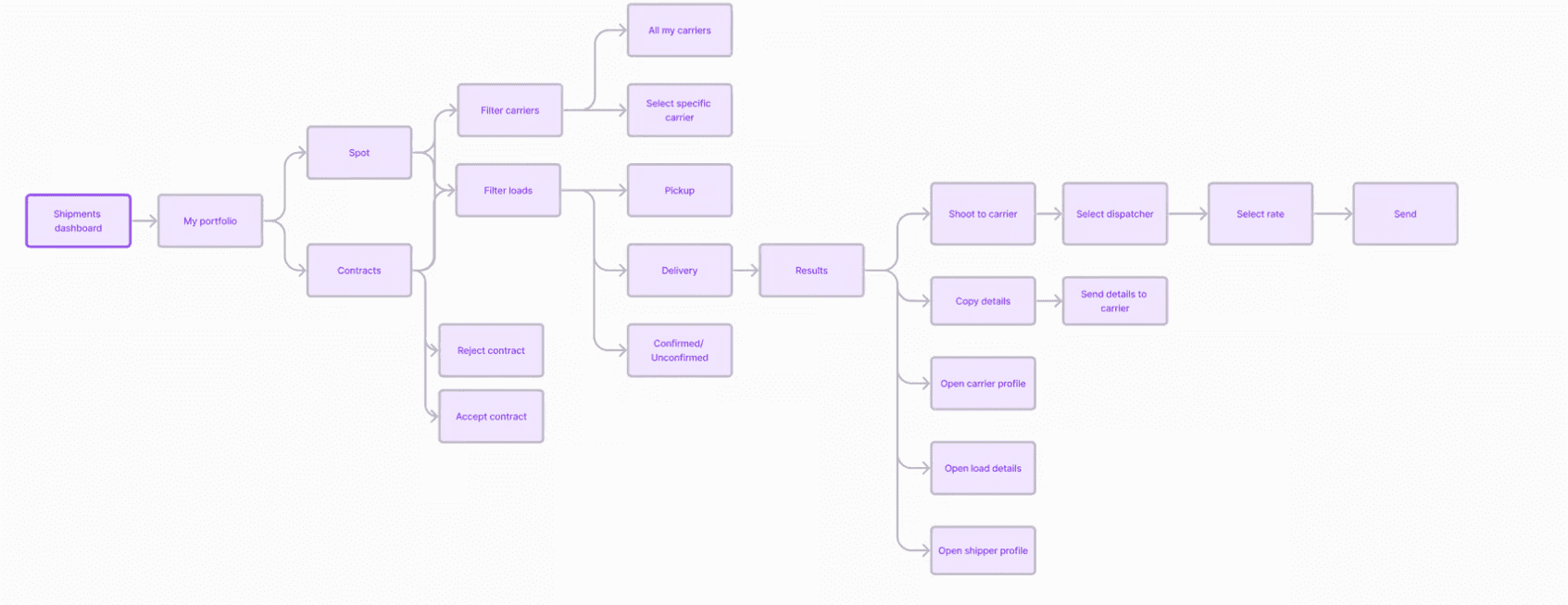
Due to time constraints and the existence of a well-established Design system, we've adopted an efficient approach by concentrating on user flows and bypassing wireframing. Our decision was to directly advance to creating a high-fidelity mockup for user testing.
First results after 1 month release
Contracts rejection down
26%
From 21.36% to 15.82%
Tiered carrier retention up to
76%
Compared to 64% MoM
Acceptance button up to
500
weekly events
Problem
Following all the research and discovery, we constructed an opportunity tree to gain a clearer understanding of our priorities. This involved considering design and engineering efforts alongside the potential business impact to determine our initial focus areas.
Due to time constraints and the existence of a well-established Design system, we've adopted an efficient approach by concentrating on user flows and bypassing wireframing. Our decision was to directly advance to creating a high-fidelity mockup for user testing.
Carrier Management
Comprehensive visibility into their carrier portfolio, including active contracts and carrier-specific preferences.
Enhanced load-to-carrier matching, enabling faster and smarter sourcing decisions based on the best fit for each load.
Leveraging an existing design system, high-fidelity prototypes were created and tested early, enabling a rapid path from research to implementation.
What is Loadsmart?
Loadsmart is an American company that creates technology solutions for the logistics industry, serving carriers, shippers, and facilities. They operate an internal brokerage enabled by digital tools, and they also develop tech tools to enhance other companies' operations.
I worked as a product designer for two related teams that the main goal was to improve the sourcing process for Carrier Sales Representatives.
The Carrier Management tool was invisioned to help Carrier Sales Representatives see all their current carrier portfolio and active contracts, enabling them to make better and smarter decisions
Interview topics
Carrier service
Pain Points
Finding new carriers
Contracts
Compliance
After sourcing
Process
Throughout the week in Chicago, we engaged in shadowing and conducted interviews with the team to gain deeper insights into the challenges we were encountering. Over this period, we had discussions with 12 individuals and conducted two workshops. This collaborative effort involved working closely with two product managers.
In office research
Goals
Identify the specific challenges and pain points experienced by CS Reps in their day-to-day activities, with the aim of developing or enhancing products to address these issues.
Explore the software and tools utilized by CS Reps in their routine tasks to identify potential integration or improvement opportunities.
Examine the impact of the removal of DAT on the routine of CS Reps and understand how their work processes have been affected as a result.
Interview topics
Carrier service
Pain Points
Finding new carriers
Contracts
Compliance
After sourcing
Process
Throughout the week in Chicago, we engaged in shadowing and conducted interviews with the team to gain deeper insights into the challenges we were encountering. Over this period, we had discussions with 12 individuals and conducted two workshops. This collaborative effort involved working closely with two product managers.
Outcomes
We successfully gathered enough information to construct the journey for two distinct profiles:
Capacity delevopment (users who managed contracts)
Carrier Sales Representatives
User Journey
Opportunity tree
User flow
Following all the research and discovery, we constructed an opportunity tree to gain a clearer understanding of our priorities. This involved considering design and engineering efforts alongside the potential business impact to determine our initial focus areas.
Due to time constraints and the existence of a well-established Design system, we've adopted an efficient approach by concentrating on user flows and bypassing wireframing. Our decision was to directly advance to creating a high-fidelity mockup for user testing.
Final results
Problem
Following all the research and discovery, we constructed an opportunity tree to gain a clearer understanding of our priorities. This involved considering design and engineering efforts alongside the potential business impact to determine our initial focus areas.
Due to time constraints and the existence of a well-established Design system, we've adopted an efficient approach by concentrating on user flows and bypassing wireframing. Our decision was to directly advance to creating a high-fidelity mockup for user testing.
Carrier Management
Comprehensive visibility into their carrier portfolio, including active contracts and carrier-specific preferences.
Enhanced load-to-carrier matching, enabling faster and smarter sourcing decisions based on the best fit for each load.
Leveraging an existing design system, high-fidelity prototypes were created and tested early, enabling a rapid path from research to implementation.
What is Loadsmart?
Loadsmart is an American company that creates technology solutions for the logistics industry, serving carriers, shippers, and facilities. They operate an internal brokerage enabled by digital tools, and they also develop tech tools to enhance other companies' operations.
I worked as a product designer for two related teams that the main goal was to improve the sourcing process for Carrier Sales Representatives.
The Carrier Management tool was invisioned to help Carrier Sales Representatives see all their current carrier portfolio and active contracts, enabling them to make better and smarter decisions
Background
Loadsmart used DAT to help Carrier Sales Reps quickly source loads, especially for same-day needs. Discontinuing DAT has created challenges, particularly in maintaining margins and service levels. With a freight market rebound expected, we were concerned about the strain on carrier sales operations. To address this, we're actively seeking new solutions to optimize sourcing and enhance operational efficiency, ensuring we're prepared for the anticipated surge in volume.
Timeline
From initial explorations to final designs in just 4 weeks, including one week of field research with users in Chicago.
In office research
Goals
Identify the specific challenges and pain points experienced by CS Reps in their day-to-day activities, with the aim of developing or enhancing products to address these issues.
Explore the software and tools utilized by CS Reps in their routine tasks to identify potential integration or improvement opportunities.
Examine the impact of the removal of DAT on the routine of CS Reps and understand how their work processes have been affected as a result.
Interview topics
Carrier service
Pain Points
Finding new carriers
Contracts
Compliance
After sourcing
Process
Throughout the week in Chicago, we engaged in shadowing and conducted interviews with the team to gain deeper insights into the challenges we were encountering. Over this period, we had discussions with 12 individuals and conducted two workshops. This collaborative effort involved working closely with two product managers.
Outcomes
We successfully gathered enough information to construct the journey for two distinct profiles:
Capacity delevopment (users who managed contracts)
Carrier Sales Representatives
User Journey
Opportunity tree
User flow
Following all the research and discovery, we constructed an opportunity tree to gain a clearer understanding of our priorities. This involved considering design and engineering efforts alongside the potential business impact to determine our initial focus areas.
Due to time constraints and the existence of a well-established Design system, we've adopted an efficient approach by concentrating on user flows and bypassing wireframing. Our decision was to directly advance to creating a high-fidelity mockup for user testing.
Solution
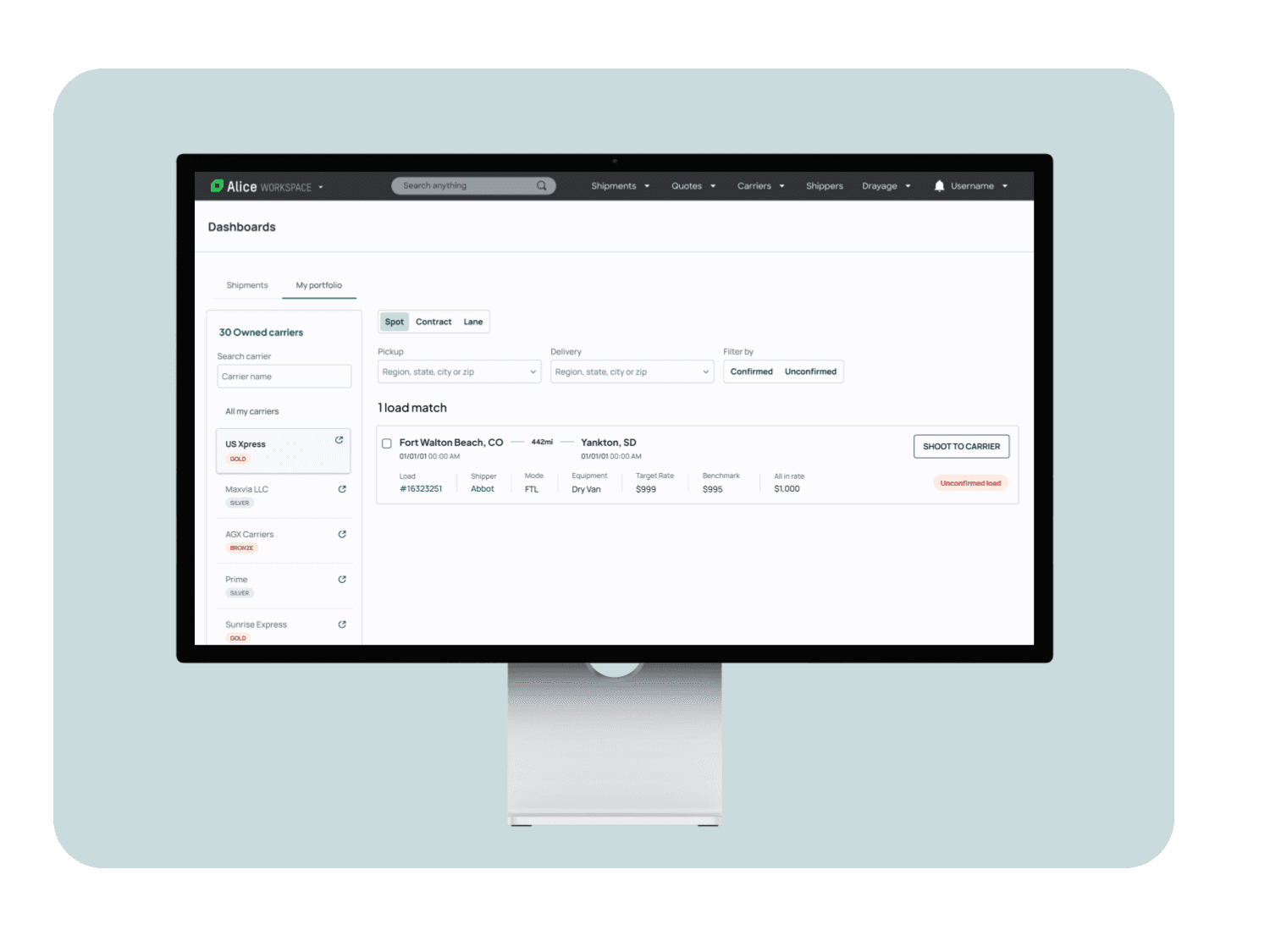
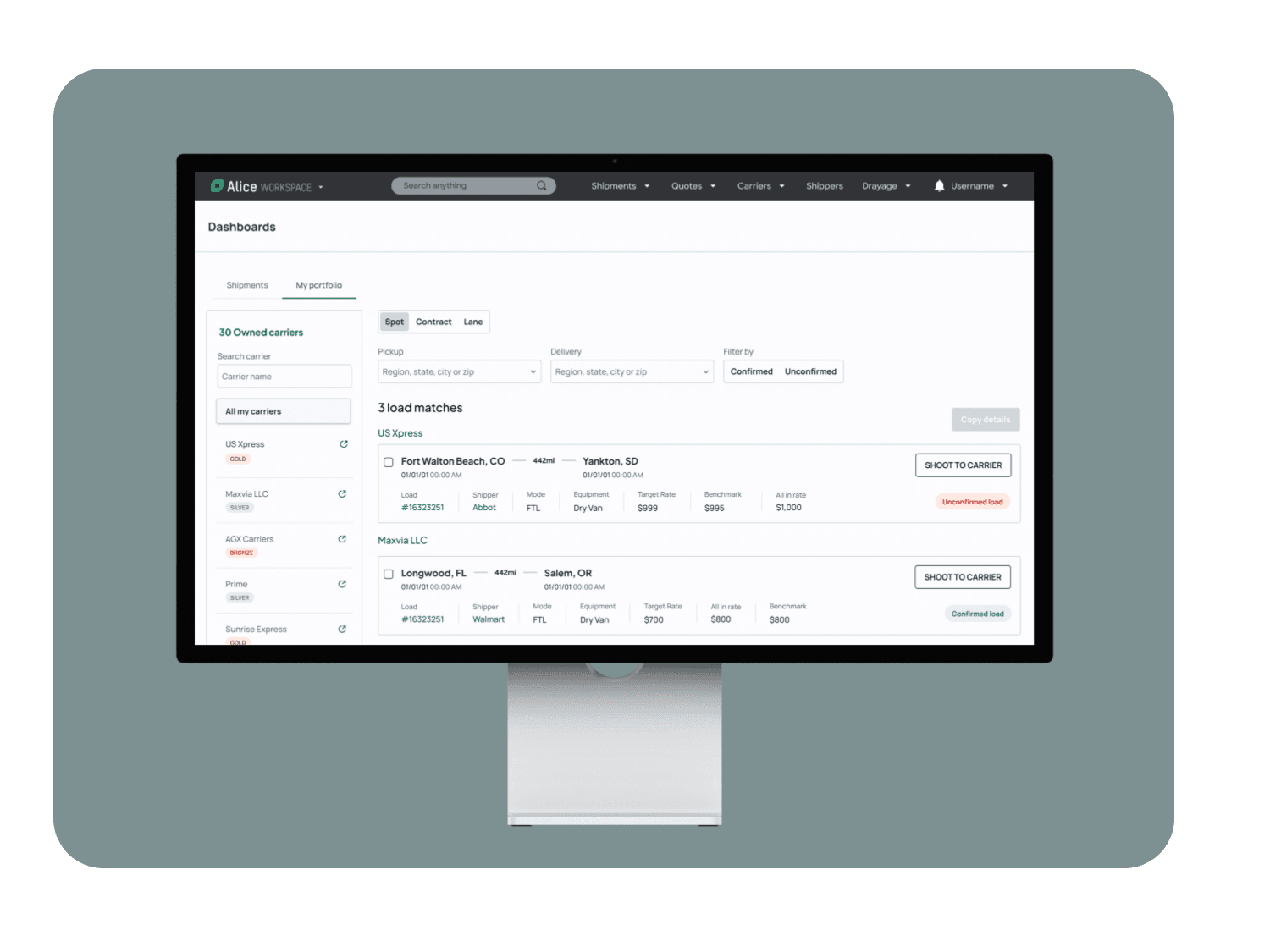
After taking the opportunity tree into consideration and finilizing the user flow we decided to build 2 simple but effect solution.
The first one, provide representatives with increased visibility into carriers within their portfolio, enabling more effective management and enhance visibility into loads that align with carriers' preferences, empowering representatives to optimize their matching process
Follow me on other channels
Follow me on other channels
Follow me on other channels